**This is an old revision of the document!**
Table of Contents

"Pigs are our strong thing"
Ongka and the gift
Ryan Schram
Mills 169 (A26)
ryan.schram@sydney.edu.au
Monday, August 7, 2017
Available at: http://anthro.rschram.org/1002/2.1
The Kula Ring
Bagi

(Necklace [bagi], late 20th century, Pacific Ethnographic Collection #80.1/3369, American Museum of Natural History)
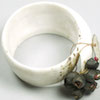
Mwali

(Armband [mwali], late 20th century, Pacific Ethnographic Collection #80.1/3409, American Museum of Natural History)
Look closely

Vase or faces? (Rubin 1915)

Which way is the cube oriented? (Necker 1832)
Who is he?

What do you notice about this person? (Nairn 1976)
Let's watch
We will watch the first part of Ongka's Big Moka, approximately 25 minutes.
What did you think?
Take out a piece of paper. Talk for a few minutes with the person or people next to you. What questions do you have? What do you want to know more about? What would be good to discuss in tutorial?
Write down your questions and reactions.
Now you can take that piece of paper to tutorial, and discuss your ideas in class.
What's next
On Wednesday, we learn why Ongka must give moka, and must reciprocate moka. The answer comes from the theories of Marcel Mauss.
We discuss why gifts create obligations: to give, to receive, and to reciprocate.
We then talk about why this matters to understanding contemporary society.
References
Anonymous. late 20th century, A.D. Armband. Shell, string, bead, seed, fiber, leaf (palm). 80.1/ 3409. Pacific Ethnographic Collection, American Museum of Natural History. http://anthro.amnh.org/anthropology/databases/common/public_access.cfm?object_list=80.1%2F%203409.
—–. late 20th century, A.D. Necklace. Shell, cord. 80.1/ 3369. Pacific Ethnographic Collection, American Museum of Natural History. http://anthro.amnh.org/anthropology/databases/common/public_access.cfm?object_list=80.1%2F%203369.
Nairn, Charlie. 1976. Ongka's Big Moka. Granada Television. http://www.der.org/films/ongkas-big-moka.html.
Necker, L. A. 1832. “Observations on some remarkable optical phaenomena seen in Switzerland; and on an optical phaenomenon which occurs on viewing a figure of a crystal or geometrical solid”. London and Edinburgh Philosophical Magazine and Journal of Science 1(5): 329-337.
Rubin, Edgar. 1915. Synsoplevede figurer, studier i psykologisk Analyse, Ite Del. Copenhagen: Gyldendal.